

| Preview | Description
  | Notes | Content | Updated by |
|---|---|---|---|---|
 | Portrait of John Leslie Breck 1891 National Gallery of Art Washington, D.C. | GA | Anonymous | |
 | St. Isidor, Rome 1911 Smithsonian American Art Museum Washington, D.C. | GA | Anonymous | |
 | Sylvan Toilette c.1898 | Unrated | Anonymous | |
 | Syrinx, Par Maziere, 1689; Bassin d'Apollon 1913 Smithsonian American Art Museum Washington, D.C. | GA | Anonymous | |
 | Terminal Figure of Ceres 1911 Smithsonian American Art Museum Washington, D.C. |  This painting shows a statue of Ceres in a garden of Versailles, France. Ceres was the Roman goddess of harvest and fertility, and among her symbols are sheaves of grain. Carroll Beckwith created this painting in September, and the scene glows with the vibrant light of autumn. | GA | Anonymous |
 | The Blacksmith 1909 Smithsonian American Art Museum Washington, D.C. | GA | Anonymous | |
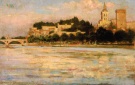 | The Palace of the Popes and Pont d'Avignon 1911 Smithsonian American Art Museum Washington, D.C. | GA | Anonymous | |
 | Woman with Guitar | Unrated | Anonymous |
- James Carroll Beckwith

